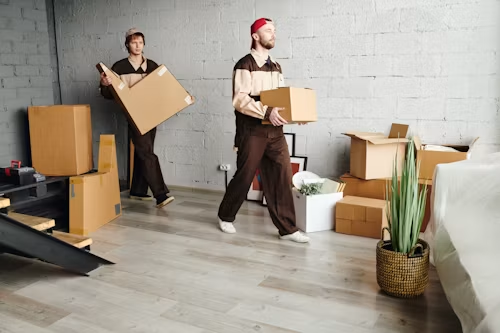
Moving day has a particular rhythm. There is the early-morning anxiety, the first heavy lift, the moment the truck door rolls up and the long afternoon of unloading. People who try to do it all themselves often discover, around the third staircase, that they have underestimated both the work and their own limits.
This article explains what trained crews actually do and where they make the biggest difference.
What do professional movers do?
Professional movers load, transport and unload your belongings using trained handling techniques, protective materials and equipment designed for heavy or awkward items. Many also offer packing, furniture disassembly and reassembly, and other support depending on the package.
The service varies, so confirm what is included before you book.
1. They bring the right equipment
Moving is not just lifting. A trained crew typically arrives with:
- Moving blankets and stretch wrap
- Dollies and hand trucks
- Straps and tie-downs
- Mattress and sofa covers
- Tools for disassembling furniture
- Floor protection where needed
Right tools reduce strain and damage. A heavy dresser on a dolly with proper straps is a very different proposition from two friends trying to carry it down a flight of stairs.
2. They protect furniture properly
Furniture damage usually happens in small ways: a scraped corner, a torn upholstery edge, a dented door frame. Experienced crews know how to wrap and pad each piece, how to angle furniture around corners and how to load a truck so weight and pressure are distributed sensibly.
For many people, furniture protection is the main reason to hire help. Wood, glass, leather and appliances all need different handling, and a crew that does this every week has seen most situations.
3. They load efficiently
Loading a truck is closer to solving a puzzle than throwing things in the back. Heavy items go on the bottom and against the front wall, boxes are stacked in stable layers, and furniture is secured so nothing shifts in transit. A well-loaded truck has less wasted space, which can matter for cost and safety.
Efficient loading also makes unloading faster, since items come off in a sensible order.
4. They reduce physical strain and injury risk
Moving is physically demanding. Back strain, pulled muscles and dropped items are common among people who attempt a large move without help. Trained crews use lifting techniques and teamwork that spread the load. That does not eliminate risk, but it lowers it, and it saves you from spending the next day in pain.
5. They save time
An experienced crew can load and unload far faster than most households. That matters if you have a tight window, such as a lease ending at noon, a condo elevator booking, a closing date or a work start the next day.
For a family balancing childcare, jobs and a mountain of boxes, the time saved can be significant.
6. They help the day stay organized
A good team lead walks the home with you, confirms what is going, identifies fragile items and agrees on placement at the destination. That structure helps avoid the confusion that happens when many helpers are working without a plan.
Clear communication also matters during the day. You should know when loading starts, when the truck leaves and roughly when it will arrive.
Services that fit different moves
Not every household needs the same level of help. Typical options include:
- Labour only: a crew loads or unloads, and you supply the truck
- Truck plus crew: loading, transport and unloading
- Packing support: partial or full packing, with supplies
- Furniture protection: blankets, wrap and mattress covers
- Specialty items: pianos, safes and large equipment, subject to the company’s policies
A residential movers team can adapt to the size of your home and the complexity of the job, whether it is a small apartment or a multi-bedroom house. When you request a quote, describe stairs, parking, large items and any fragile belongings in detail, so the plan fits reality.
Are professional movers worth it?
For many households, yes, especially when moving involves heavy furniture, tight timing, long routes or fragile belongings. The value is in time, protection and reduced physical strain rather than just labour.
If your budget is tight, a partial solution can work: pack yourself and hire a crew only for heavy furniture and transport. The right balance depends on your priorities.
How movers handle difficult situations
Stairs and narrow hallways: Crews plan angles, remove doors if needed and use straps to control heavy pieces.
Weather: In Calgary winters, teams may use floor protection, wipe boots between trips and adjust loading to limit exposure to snow and ice.
Condo and apartment rules: Experienced crews understand elevator bookings, loading docks and building requirements.
Oversized furniture: Large sectionals, wardrobes and bed frames often need disassembly. Confirm that this is included before moving day.
What you can do to help
Even with a skilled team, you play a role:
- Be available on the day
- Label boxes and furniture
- Keep valuables and documents with you
- Clear a path through the home
- Confirm parking and access
- Tell the crew about fragile or valuable items
- Be clear about placement at the new home
Technology that makes moves easier
Some companies now offer features that make a move less opaque. Live truck tracking, for instance, lets you see where your belongings are during transit. Magic Move lists truck tracking as part of its service, which can be reassuring on longer routes or when you are waiting at the new address. Ask any company you are considering what kind of communication or tracking they offer.
The emotional side of moving day
A move is a milestone, whether it is the first apartment, a new job, a growing family or a downsizing. That can make moving day emotional. Having a calm, organized crew in the home can take away some of the logistical pressure so you can focus on the transition.
What to expect at the end of the day
At the destination, a good crew will unload to the rooms you designate, reassemble furniture if agreed, place boxes where labelled and conduct a final walkthrough with you. Check that everything has arrived, inspect furniture and raise any concerns before the team leaves.
Conclusion
Professional movers make moving day easier by bringing tools, technique, speed and structure. They protect furniture, reduce physical strain and help the day run on schedule. The right level of help depends on your move, but understanding what a good crew provides makes it easier to choose.
FAQs
What should I expect from a professional moving service?
Clear communication, protective materials, efficient loading, careful transport and unloading to the rooms you specify. Packing and extras depend on the package.
Do movers provide packing materials?
Many do, either included or for a fee. Ask what is provided and what you should supply.
Can movers move heavy items like pianos?
Some can, but policies vary. Ask about specialty items in advance.
Should I stay home during the move?
Yes, or have a representative present to answer questions and direct placement.