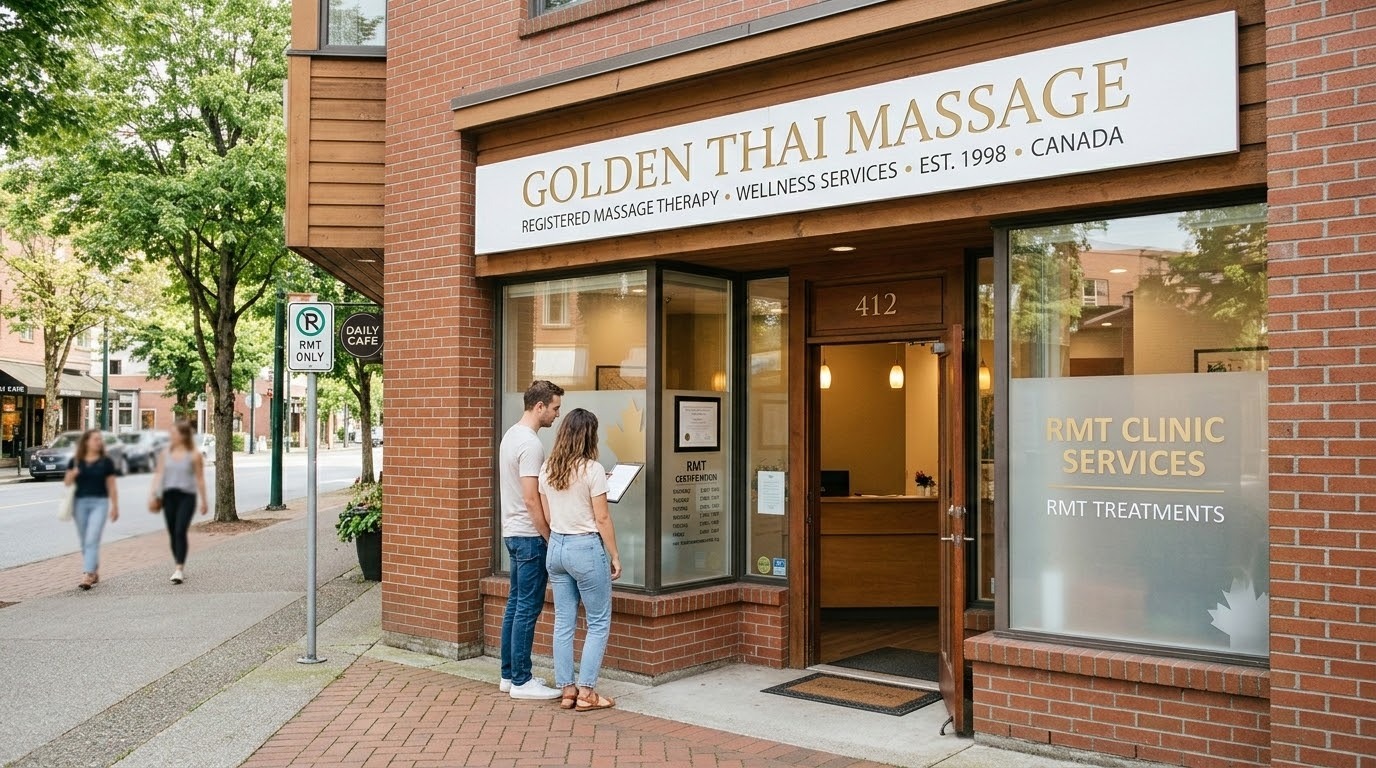
Understand the difference between relaxation massage, Thai massage, Swedish massage, custom massage, RMT care, and recovery-focused sessions before booking.
Searching for a local massage can feel simple at first. Then the options start to blur together: Thai massage, Swedish massage, deep tissue, relaxation massage, custom massage, RMT care, sports-style recovery, and wellness studio services.
For busy professionals, choosing the right appointment matters. The goal is not just to find the closest provider. It is to choose a massage style that fits the reason for booking, the desired pressure level, and the type of support needed that day.
Start With the Reason You Want a Massage
Before comparing massage styles, it helps to clarify the main goal. Someone booking after a stressful workweek may want a calming full-body session. Someone with desk-related shoulder tension may want focused attention on the neck, upper back, and shoulders. Someone who stands, lifts, drives, or trains regularly may want pressure that targets areas carrying more physical strain.
This first step helps narrow the search. A massage for general relaxation may feel different from a session focused on muscle tension after work or exercise. A person looking for clinical assessment, injury treatment, or insurance billing may also need a different kind of provider than someone looking for comfort-focused bodywork.
The clearer the goal, the easier it becomes to choose the right service.
Know When RMT Care May Be the Better Fit
Registered Massage Therapy, often called RMT care, is a regulated health service in many parts of Canada. It may be appropriate when someone needs clinical support, treatment planning, assessment, rehabilitation-focused care, or documentation for insurance benefits.
That does not mean every massage appointment needs to be clinical. Many people are not looking for diagnosis or insurance billing. They may simply want help with stress, general tension, tight muscles, or a calmer body after a demanding week.
The important point is service scope. Before booking, readers should check whether the provider offers RMT care, non-RMT massage, relaxation-focused massage, or wellness-style bodywork. Knowing the difference helps prevent confusion and creates better expectations before the appointment begins.
Understand the Role of Relaxation and Swedish Massage
Relaxation massage and Swedish massage are often chosen by people who want a calmer, more restorative experience. These sessions commonly focus on flowing movements, lighter to moderate pressure, and overall relaxation.
For professionals dealing with stress, long meetings, commuting, or mental fatigue, this style can be a practical reset. It may also be a good choice for first-time massage clients who want a comfortable introduction without intense pressure.
Relaxation-focused massage can still address areas of tension, but it is usually not built around aggressive pressure or highly targeted recovery work. The best fit depends on whether the person wants general calm, focused muscle attention, or a blend of both.
Consider Thai Massage for Stretching, Pressure, and Mobility
Thai massage is often associated with assisted stretching, compression, and rhythmic pressure. Depending on the setting, it may feel more active than a traditional relaxation massage. Some people choose it when they want support for stiffness, flexibility, or a body that feels restricted from sitting, standing, training, or repetitive work.
For someone comparing local options, it helps to ask how Thai massage is delivered. Some studios offer table-based sessions, while others may use mats or different formats. Pressure and stretching intensity can also vary.
For readers comparing local providers, resources on masseuse near me can help clarify location, service style, and what to expect before booking a massage appointment.
The right Thai massage experience should feel professional, respectful, and matched to the client’s comfort level.
Use Custom Massage When the Goal Is More Specific
Custom massage can be helpful when someone does not fit neatly into one category. A client may want relaxation, but also need extra attention on the shoulders. Another person may want a calming session with firmer pressure through the legs or lower back.
This is where communication becomes important. Clients should be able to explain what feels tight, what pressure they prefer, and which areas should receive more or less attention. A clear provider should explain how the session can be adjusted before or during the appointment.
The Canadian Centre for Occupational Health and Safety notes that work-related musculoskeletal disorders can be connected to repeated movements, awkward postures, forceful exertions, and sustained positions. For many professionals, tension develops gradually from daily habits, so a flexible massage approach can make sense.
Think About Recovery-Focused Massage for Active Routines
Recovery-focused massage may be useful for people who train, play recreational sports, hike, cycle, run, lift, or work physically demanding jobs. The focus is often on areas that feel overused, such as calves, hips, lower back, shoulders, neck, or legs.
This kind of session does not need to be extreme. Deeper pressure is not automatically better. The goal is to match the work to the person’s comfort, activity level, and recovery needs.
The World Health Organization notes that regular physical activity supports health. For active people, recovery habits also matter. Massage can be one part of a broader routine that includes rest, stretching, hydration, sleep, warm-ups, cool-downs, and movement breaks.
Check Practical Details Before Booking
Once the massage style seems clear, practical details matter. Readers should check location, hours, booking process, session lengths, pricing, draping expectations, and whether pressure can be adjusted.
A good local option should make the next step easy. If a person is already searching because they feel tense, tired, or uncomfortable, unclear booking details can create unnecessary friction.
Before booking, busy professionals should look for clear service details, adjustable pressure, convenient hours, and a setting that matches their comfort level.
Conclusion
When local massage options all sound similar, the right choice starts with the reason for booking. Relaxation massage, Thai massage, Swedish massage, custom massage, RMT care, and recovery-focused sessions can all serve different needs.
By understanding service scope, pressure preferences, appointment goals, and practical booking details, readers can choose a massage option that feels professional, comfortable, and aligned with what their body needs.
Additional Resources
For nearby appointment details and local context, readers can review massage near me resources when comparing local massage options.